Cookies, anyone?

We use cookies to enhance your browsing experience and analyze our traffic. YouTube and Twitch videos place their own cookies. By clicking "Accept All", you consent to our use of cookies.
Cookies, anyone?
We use cookies to enhance your browsing experience and analyze our traffic. YouTube and Twitch videos place their own cookies. By clicking "Accept All", you consent to our use of cookies.
We use cookies to help you navigate efficiently and perform certain functions. You will find detailed information about all cookies under each consent category below.
The cookies that are categorized as "Necessary" are stored on your browser as they are essential for enabling the basic functionalities of the site. ...
Necessary cookies are required to enable the basic features of this site, such as providing secure log-in or adjusting your consent preferences. These cookies do not store any personally identifiable data.
Functional cookies help perform certain functionalities like sharing the content of the website on social media platforms, collecting feedback, and other third-party features.
Analytical cookies are used to understand how visitors interact with the website. These cookies help provide information on metrics such as the number of visitors, bounce rate, traffic source, etc.
Performance cookies are used to understand and analyze the key performance indexes of the website which helps in delivering a better user experience for the visitors.
Advertisement cookies are used to provide visitors with customized advertisements based on the pages you visited previously and to analyze the effectiveness of the ad campaigns.
Other uncategorized cookies are those that are being analyzed and have not been classified into a category as yet.

5


Filter reviews on score
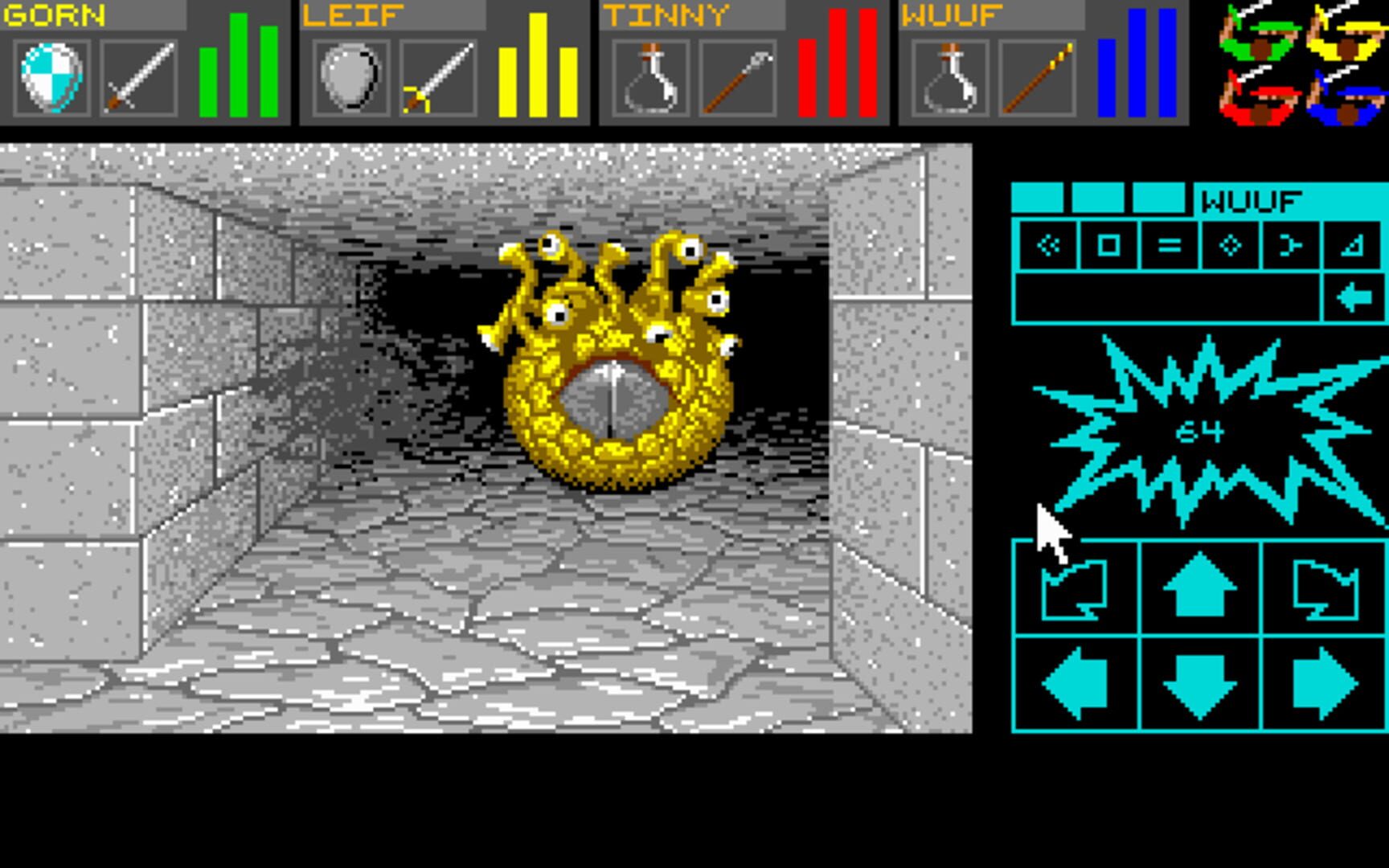
Dungeon Master established several new standards for role playing and computer games in general. Dungeon Master was a realtime game instead of the traditional turn-based approach that was prevalent until then. Instead of using text-based commands to interact with the environment, players directly manipulated objects and the environment by clicking the mouse in the enlarged first-person view. Abstract Dungeons and Dragons style experience points and levels were eschewed in favor of a system where the characters' skills were improved directly via using them. It also introduced some novel control methods including the spell casting system, which involved learning sequences of runes which represented the form and function of a spell's effect. For example, a fireball spell was created by mixing the fire symbol with the wing symbol. This kind of attention to detail and focus on the user interface was typical of the game and helped create an often captivating sense of craft and ingenuity. Other factors in immersiveness were the then-revolutionary use of sound effects to indicate when a creature was nearby, and (primitive) dynamic lighting.

The YouTube player uses cookies, please accept functional cookies and advertisement cookies to watch this video.

What's a champion?info
Profiles that previously championed
Profiles currently championing
Profiles that want to champion
Co-op with the developers behind the games you love and believe in
Comment