196


Filter reviews on score
Dear Esther: Landmark Edition
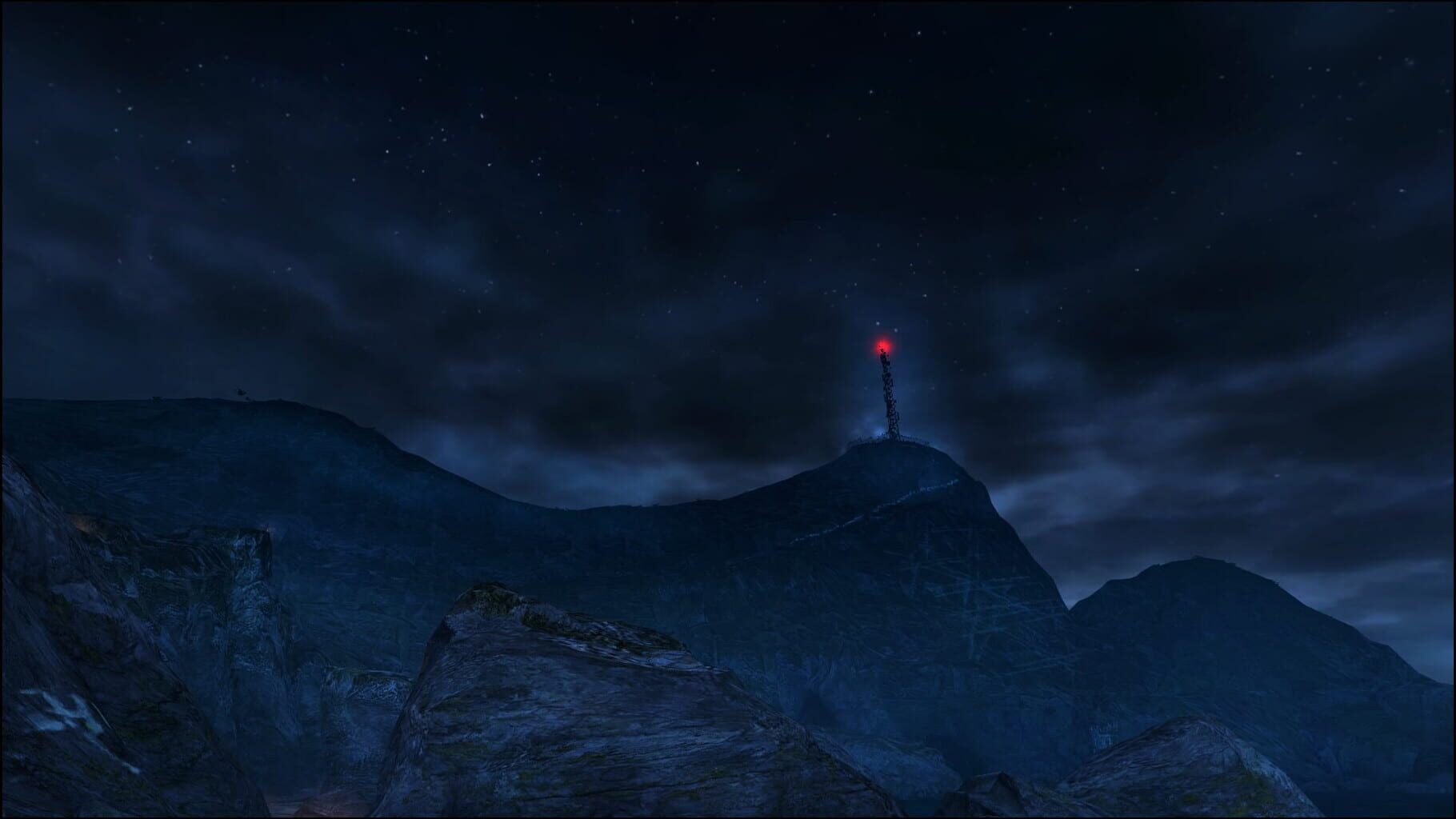
Dear Esther: Landmark Edition has been remade with the Unity engine, featuring a full audio remaster, and the addition of a brand-new Directors' Commentary mode, allowing players to explore the island and learn what inspired the game and how it was crafted by The Chinese Room and Rob Briscoe. Dear Esther immerses you in a stunningly realised world, a remote and desolate island somewhere in the outer Hebrides. As you step forwards, a voice begins to read fragments of a letter: 'Dear Esther...' - and so begins a journey through one of the most original first-person games of recent years.
Champions
What's a champion?info
Past
Profiles that previously championed
Present
Profiles currently championing
Future
Profiles that want to champion
Become a Champion
Co-op with the developers behind the games you love and believe in
Create a post
 Dear Esther: Landmark Edition
Streamed on Monday.

Comment

1 hours
Chillout Walking Stimulator
1Comment

4 hours
A walking simulator where you explore an uninhabited island. There's not a lot going on so it's really casual, but much of the island is breathtaking, particularly in the cave. It's a really lovely experience, despite the emotional story you uncover.
One of the achievements was to listen to all the director's commentary, which I actually ended up thoroughly enjoying. I did this as a second playthrough but it really added to the experience.
Comment


Потраченное время на самом деле или я не выкупил, не знаю
Comment

Enjoyed this game. I like how calm and reflective it is. It was a bit buggy but it was funny when it bugged out.
Comment


Reply


5 hours
It's a walking simulator boys, go into it expecting that and you're in for an okay story
Comment

1 hours
Dobré, zvláštne, iné.
Comment

4 hours
Some people might don't like it / get bored of it but some people might enjoy it. And I do like this one. Why? First of all, I got this game when it was free to keep & after seen the trailer, I decided to play it. First time playing walking simulator.
And yeah... My experience couldn't be better. I don't have anything to say, I just captured every scenery in this game because they look beautiful & it's even more beautiful when I look it on top of the cliff.
The gameplay itself is simple. Look, Walk, Hear. 1 thing you might don't like is the walking is slow (you can't sprint / run). I slightly hated it but I think it was meant to see & hear the beautiful of environments in that game.
Comment

beautiful game once u understand it
Comment

1 hours
Short walking game but pretty chill and fairly cool visuals.
Comment

1 hours
A Serene Journey Through Emotion: Review of "Dear Esther: Landmark Edition"
Rating: ★★★★☆ (4/5)
"Dear Esther: Landmark Edition" is an ethereal and thought-provoking experience that defies traditional gaming conventions, offering players a unique narrative-driven journey through a hauntingly beautiful world. Developed by The Chinese Room, this "walking simulator" challenges the boundaries of interactive storytelling while delivering a contemplative exploration of themes that linger long after the experience concludes.
At its heart, "Dear Esther" is less of a game and more of an interactive narrative. The story unfolds as players traverse a remote Hebridean island, uncovering fragments of a sorrowful tale through poetic narration. The voice acting, delivered with a sense of melancholic introspection, breathes life into the enigmatic protagonist's thoughts.
Visually, "Dear Esther" captivates with its atmospheric landscapes. The Landmark Edition's enhanced visuals further elevate the experience, with detailed textures, improved lighting, and an attention to environmental details that imbue the island with an aura of mystique. The sense of isolation and tranquility is palpable, creating an immersive canvas for the narrative.
The game's minimalistic gameplay mechanics encourage introspection and exploration. The absence of traditional challenges and puzzles is intentional, allowing players to focus on the story and their own interpretation of the events. The musical score adds another layer of emotion to the experience, complementing the narrative's themes of loss, love, and existential contemplation.
The pacing of "Dear Esther" is deliberately slow, a reflection of the game's contemplative nature. This pacing may not be to everyone's taste, as players seeking action or traditional gameplay challenges might find it less engaging. The experience is more akin to interactive poetry than a conventional video game, and this distinction shapes the expectations players should bring to the journey.
Despite its strengths, "Dear Esther" is not without its critics. Some argue that its minimalistic approach to gameplay might not justify its classification as a video game. However, it's important to recognize the potential of interactive experiences to push the boundaries of storytelling beyond traditional mediums.
In conclusion, "Dear Esther: Landmark Edition" offers an emotionally resonant exploration of grief, memory, and contemplation through a hauntingly beautiful landscape. Its unique blend of poetic narrative, serene exploration, and enhanced visuals make it a compelling experience for those seeking thought-provoking interactive storytelling. While its deliberate pacing and minimalistic gameplay might not appeal to all gamers, those who appreciate the subtleties of a narrative-driven journey will find "Dear Esther" to be a serene and evocative gem that lingers in the mind long after the final narration fades.
Comment

Un jeu principalement contemplatif, dans une ambiance proche de Lovecraft.
Comment

2 hours
Explorar uma ilha abandonada na companhia solitária de uma pessoa sem esperança, enquanto se lembra de coisas através de cartas de um futuro improvável de acontecer. É bem triste ir descobrindo o passado e juntando as peças do que aconteceu.


5 hours
Graphically this game is dated, but I am reviewing it 9 years after release so I'm willing to believe that the visuals were above-average initially. Artistically the visuals work well. At times they provide a feeling of dirtiness, at others a strange sense of awe, at other times a sense of confusion, at other times a sense of peace, and at other times a sense of loneliness.
Audibly this game is above-average. Musically this game has beautiful pieces and I loved to hear them. My gripe with the music is that it was consistently playing, robbing the player of its consistent charm to the ears. I had guessed, and was proven correct by director commentary, that this was done to inspire feelings of loneliness in the environment at certain points and to allow the player the opportunity to reflect in silence. While I understand the logic, I disagree with the decision. If, audibly, you wanted the player to feel more alone or focus more on the environment, then the music should have been turned down, not off, while increasing the environmental noise. Without the music, parts of the game are uncomfortably lonely, which I didn't like, or just boring. This is not an objective dig at the game's music direction, merely a subjective disagreement. So far as allowing the player the think without audio obstruction, I have faith in a player's ability to multitask thinking while listening to music. I am not a good multitasker, but this is a task I can perform adequately enough, and I feel music helps to enhance reflection, not stifle it.
For audio design, some elements are nice. You can hear the crooning of waves while on the beach, and the gusts of wind as they whip past. There are audio noises that feel missing, however. At times you notice things whipping about your face, like leaves, but there is no audio whoosh to signify it; at times you'll also see small streams of water but hear no running water noise (this is dependent on the environment; I would explain more but that would risk environmental spoilers).
For gameplay, this was average. However, I feel some credit should be given to this game for coining the term "walking simulator," effectively creating a new adventure game sub-genre. You walk around and look at stuff, that's it. No puzzles, no combat, no collectibles, just walk around and observe.
In terms of story, it's a bit hard to say. We played through this game twice on stream, the second time being with the director's commentary. The commentary really helped shed light on what was unraveling, without it there would have been guesswork involved. I understand the developers desiring different interpretations of their experience, but I also like digging until I find what I feel to be the true canon, and the director's commentary allowed that.
Note: The director's commentary is exclusive to this version of the game, the Landmark Edition.
Without the commentary, the story is a bit vague and can be misunderstood and not fully appreciated, but if the player is okay with an ambiguous tale then that won't matter.
Overall, this is a good experience. There have definitely been better walking simulators since the release of this game, but this was the first. For those looking for a nice history lesson in gaming, check it out. 😉
Comment